In a world where the average professional juggles five to ten different apps just to get through a single workday, the promise of one unified platform sounds almost too good to be true. But that is exactly what New Software 418DSG7 is delivering — and businesses across every industry are paying close attention. Whether you run a small startup jobs, manage a remote team, or oversee complex enterprise operations, this platform is worth every minute of your attention.
Key Takeaways
- All-in-One Workspace: New Software 418DSG7 combines task management, real-time collaboration, automation, and data analytics into a single centralized dashboard — eliminating the need to switch between multiple apps.
- Automation That Actually Works: Custom workflow automation reduces repetitive manual tasks, saving teams dozens of hours each month and cutting down on human error significantly.
- Built for Every Scale: Whether you are a solo freelancer or part of a 500-person enterprise, 418DSG7 adapts to your workload with flexible pricing tiers and modular features.
- Real-Time Decision Making: Live dashboards and performance analytics give teams instant visibility into KPIs, project timelines, and budget metrics — so decisions are always data-backed.
- Fast, Frictionless Onboarding: No coding knowledge is required. Teams can sign up, integrate their existing tools, and start working within minutes — not days.
What Exactly Is New Software 418DSG7?
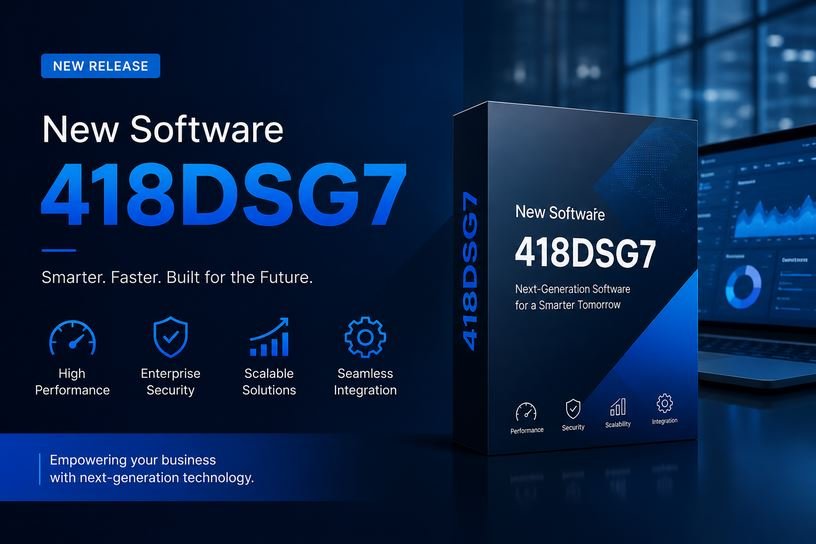
Let us be straightforward about this. New Software 418DSG7 is a cloud-based productivity and workflow management platform designed to bring together all the essential functions modern teams need — task management, team collaboration, workflow automation, performance tracking, and data analytics — under one roof.
The name might sound like an internal product code, and in many ways it functions like one: precise, structured, and purpose-built. But behind the technical-sounding label sits a surprisingly intuitive platform that works for beginners and power users alike.
The core problem it solves is one almost every team knows too well — tool fragmentation. Most organizations today rely on separate apps for chat, project tracking, file sharing, reporting, and task management. Jumping between all these platforms burns time, creates gaps in communication, and makes it nearly impossible to get a clear view of what is actually happening across your team.
418DSG7 was built specifically to solve that fragmentation. Instead of patching together a dozen tools, you get one workspace where everything talks to everything else.
A Closer Look at Its Core Features
1. Smart Workflow Automation
One of the most talked-about capabilities of 418DSG7 is its automation engine. Users can design custom workflows that handle repetitive processes automatically — from routing tasks to the right team member based on priority, to sending status update notifications when a project milestone is reached.
This is not surface-level automation. The system is sophisticated enough to reduce manual overhead across multiple departments simultaneously, improving both speed and accuracy. For teams that spend a significant chunk of their week on low-value administrative work, this alone is a game-changer.
2. Real-Time Collaboration Tools
418DSG7 includes built-in live editing, team chat, file sharing, and task assignment — all synced in real time. Team members can update tasks, leave comments, share documents, and assign responsibilities without ever stepping outside the platform.
For remote and hybrid teams in particular, this kind of centralized collaboration removes the friction that usually comes with managing work across different time zones and locations. Agile boards, Kanban views, Gantt charts, list views, and calendar views give teams the freedom to organize and visualize work the way they actually think.
3. Live Dashboards and Analytics
Data-driven decisions only work if you can actually see the data clearly. 418DSG7 delivers real-time dashboards that track KPIs, project progress, budget health, and team activity feeds — all updating live without manual refreshing.
This kind of instant visibility matters at every level of an organization. A project manager can spot a bottleneck before it becomes a crisis. An executive can see department-wide performance at a glance. A team member knows exactly where their tasks stand without needing to ask anyone.
4. Centralized Data Hub
Context switching is not just annoying — it is expensive. Research has shown that professionals can lose well over 100 hours per year simply from bouncing between apps. 418DSG7 tackles this directly by pulling project timelines, KPI tracking, budget monitoring, and team activity into a single hub. Everything you need is one click away, not five apps away.
5. Flexible Views and Customization
Different teams think differently. Some people live by Gantt charts. Others prefer Kanban boards. Still others want a simple list or a calendar. 418DSG7 accommodates all of these natively, so every team member can work in the view that makes most sense to them — without disrupting the underlying data structure that keeps everyone aligned.
Who Should Be Using It?
This is not a tool built for one type of user. Its design philosophy leans toward versatility, which means it scales well across very different working environments.
Freelancers and Solo Professionals benefit from having one place to track client projects, deadlines, deliverables, and communications — without paying for enterprise-tier tools they do not need.
Small and Mid-Sized Businesses get the operational structure of larger platforms without the complexity or price tag. The automation features, in particular, let small teams punch well above their weight.
Large Enterprises can leverage the advanced analytics, cross-department visibility, and security features to coordinate work at scale — with the kind of real-time oversight that usually requires dedicated IT infrastructure.
Project Managers and Team Leads find 418DSG7 especially valuable because it gives them a true bird’s-eye view of everything happening across their teams, with the ability to drill down into individual task-level detail whenever needed.
How 418DSG7 Compares to Other Tools
The productivity software space is crowded. Tools like Asana, Monday.com, Trello, and Notion all have loyal user bases. So where does 418DSG7 stand in that company?
The key differentiator is depth of integration within a single platform. Competing tools often do one or two things exceptionally well — Trello for visual task boards, Notion for documentation — but require third-party add-ons or integrations to cover the rest. This creates hidden complexity, additional costs, and more moving parts to maintain.
418DSG7 includes automation, analytics, collaboration, and task management as native core features, not bolt-on additions. That translates to a more seamless experience and a lower total cost of ownership over time, particularly for teams that have been paying for four or five separate tool subscriptions.
Getting Started: Easier Than You Think
One of the quiet strengths of this platform is how accessible it is on day one. There is no coding knowledge required, no lengthy onboarding program to complete, and no dedicated IT setup needed.
The process is straightforward. Visit the official website, download the latest version, confirm your system meets the minimum requirements, run the installer following the on-screen prompts, and launch the application. From there, connecting your existing tools and setting up your first workspace takes a matter of minutes.
For organizations worried about change management — the challenge of getting teams to actually adopt a new system — 418DSG7’s low learning curve is a genuine asset. When a tool is intuitive from the first session, adoption follows naturally.
Pricing Structure
418DSG7 offers a tiered pricing model designed to scale with your needs:
Free Starter Tier — Ideal for individuals and small teams exploring the platform. Covers the core functionality with some usage limits.
Professional Tier — The sweet spot for growing teams that want full automation capabilities, expanded storage, and more advanced reporting features.
Enterprise Tier — Custom solutions built for large organizations with complex security requirements, dedicated support, and maximum analytics depth.
This transparent, scalable model means you only pay for what you actually need — and you can grow into more powerful tiers as your team expands.
Real-World Impact: What Teams Are Reporting
Early adopters and business users have consistently highlighted a few outcomes after integrating 418DSG7 into their operations. The reduction in time spent on repetitive administrative tasks tends to be the first thing teams notice. Workflow automation handles the back-and-forth that used to eat up mornings, freeing people to focus on higher-value work.
The second major shift is visibility. Teams report that project status, blockers, and upcoming deadlines become much clearer when everything lives in one place with live updates. The need for lengthy status meetings decreases because the information is already available on the dashboard.
For organizations operating across multiple departments, the cross-team collaboration features create a kind of organizational coherence that is difficult to achieve when teams are isolated in their own separate tools.
Potential Limitations Worth Knowing
No software is perfect, and intellectual honesty requires acknowledging that. For very small solo operations with minimal complexity, the full feature set of 418DSG7 may be more than necessary — at least in the early stages. The free tier addresses this to some extent, but users with genuinely simple workflows might find they are not using most of what the platform offers.
Additionally, as with any workflow migration, moving from existing tools into a new platform requires an initial investment of time for setup and data transfer. That upfront cost pays dividends quickly, but it is worth factoring into your timeline.
The Bigger Picture: Why This Matters Now
The shift toward remote and hybrid work is not a temporary adjustment — it is the new baseline for how knowledge work happens. That reality has made the demand for unified, cloud-based productivity platforms more urgent than ever.
At the same time, organizations are under pressure to do more with less — fewer resources, tighter budgets, and higher expectations for output quality. Tools that genuinely reduce friction, automate low-value work, and improve team visibility are not luxuries in this environment. They are operational necessities.
418DSG7 arrives at exactly this moment with a compelling answer to both challenges. It is the kind of platform that does not just help you work faster — it helps you work smarter, with clearer information and less unnecessary complexity.
FAQs
Is New Software 418DSG7 suitable for non-technical users?
Absolutely. One of the platform’s most intentional design choices is accessibility. You do not need any programming knowledge or technical background to use it effectively. The interface is built around clarity and logical layout, so new users can start with basic features and gradually explore more advanced options at their own pace. Most teams report being fully operational within their first session.
Can 418DSG7 integrate with tools we already use?
Yes — and this is one area where the platform genuinely excels. It is designed to connect with commonly used business tools, pulling data and workflows into its centralized hub rather than forcing you to abandon everything you already rely on. The integration process is straightforward and does not require developer involvement for standard connections.
How secure is the data stored in 418DSG7?
Security is built into the platform’s architecture, particularly for Enterprise tier users. The software runs on cloud infrastructure designed with data protection standards appropriate for business use. Organizations with specific compliance requirements are encouraged to review the Enterprise tier’s dedicated security features and speak with the 418DSG7 team directly about their specific needs.
What happens if we outgrow the Free Starter Tier?
Upgrading is seamless. The tiered pricing model is specifically designed so that teams can move from the Free tier to Professional or Enterprise without data loss or platform migration headaches. Your existing projects, workflows, and team structures carry forward as you scale up.
How does 418DSG7 handle the transition from our current project management tools?
The platform is built with onboarding simplicity in mind. The setup process guides you through connecting existing tools and importing relevant data. While any tool transition involves an initial adjustment period, the intuitive interface and centralized structure mean most teams find their footing quickly. The reduction in tool-switching alone tends to recoup the migration time within the first few weeks of consistent use.
